Corrode
Corrode: A Comprehensive Guide to Valorant's French Salt Flat Battleground
Valorant's map pool continues to expand, and one of the more intriguing additions is Corrode—a map that takes players to a transformed slice of French coastal architecture. If you've been wondering what makes this battlefield tick, how its layout shapes your matches, and what you should know before jumping in, this guide breaks down everything from the map's rich lore to its core design philosophy.
Map Overview
Corrode holds the distinction of being the twelfth map released in Valorant's ever-growing competitive rotation. What immediately sets it apart from several of its predecessors is its commitment to traditional map design. Corrode is a classic two-site, three-lane map—meaning it follows the tried-and-true structure of having three primary pathways connecting the two spike sites, with an attacker side and a defender side framing the action.
For players who have cut their teeth on maps like Ascent or Haven, the fundamental flow of Corrode will feel familiar in concept. Three lanes provide multiple angles of approach for attackers while giving defenders the challenge of reading and reacting to rotations. The map rewards teams that can balance aggression with information gathering, maintaining map control across multiple fronts rather than committing everything to a single push.
Lore and Setting: Mont-Saint-Michel Reimagined
One of Valorant's greatest strengths is its world-building, and Corrode's lore is no exception. The map is set in a reimagined version of Mont-Saint-Michel, the iconic French castle town, located on the coast of Ω-Normandy in Valorant's Omega Earth universe.
In this alternate reality, Omega Earth experienced drastic climate change following the events of First Light—a pivotal moment in Valorant's overarching narrative. The consequences were dramatic: the waters surrounding Mont-Saint-Michel evaporated entirely, leaving behind vast salt flats. Rather than abandoning the area, the town's residents adapted. Mont-Saint-Michel was transformed from a picturesque tourist destination into a radianite salt mining facility, where workers extract and process the valuable mineral from the exposed seabed.
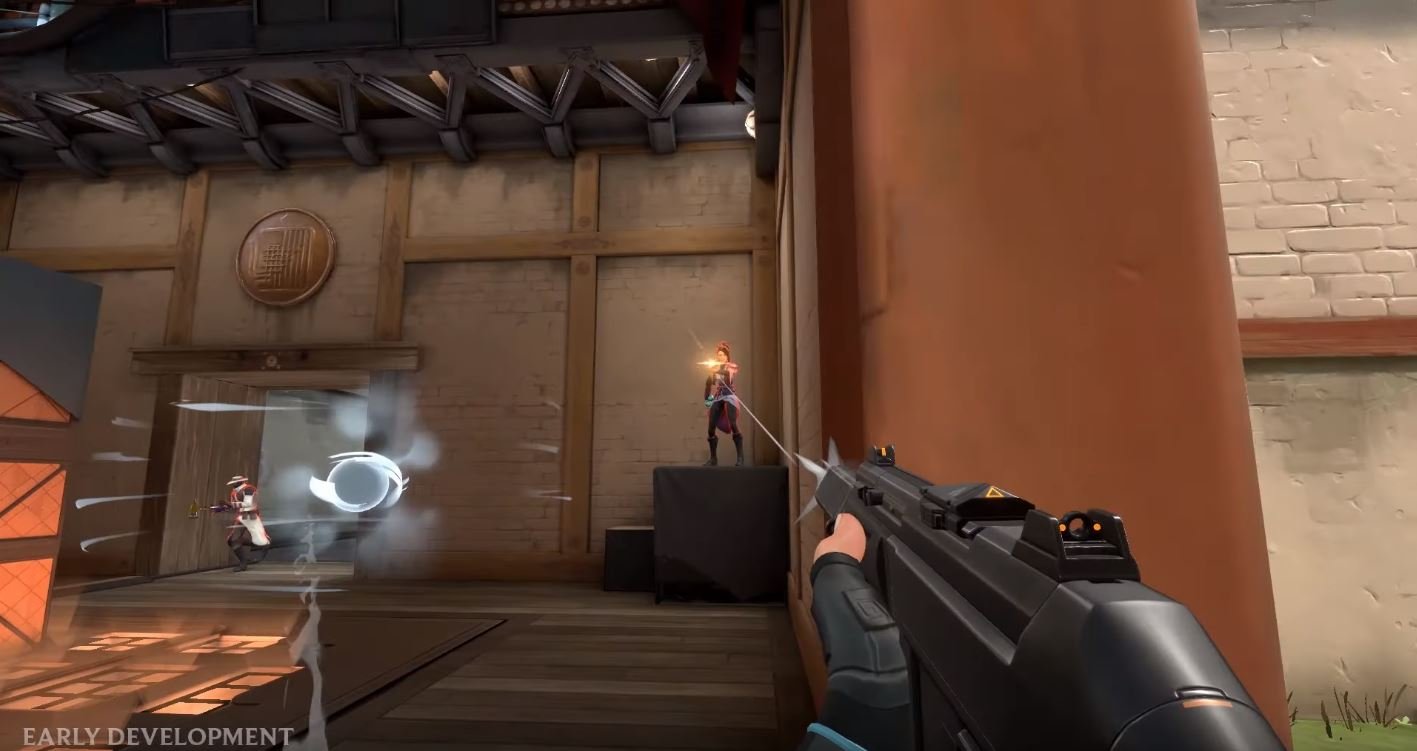
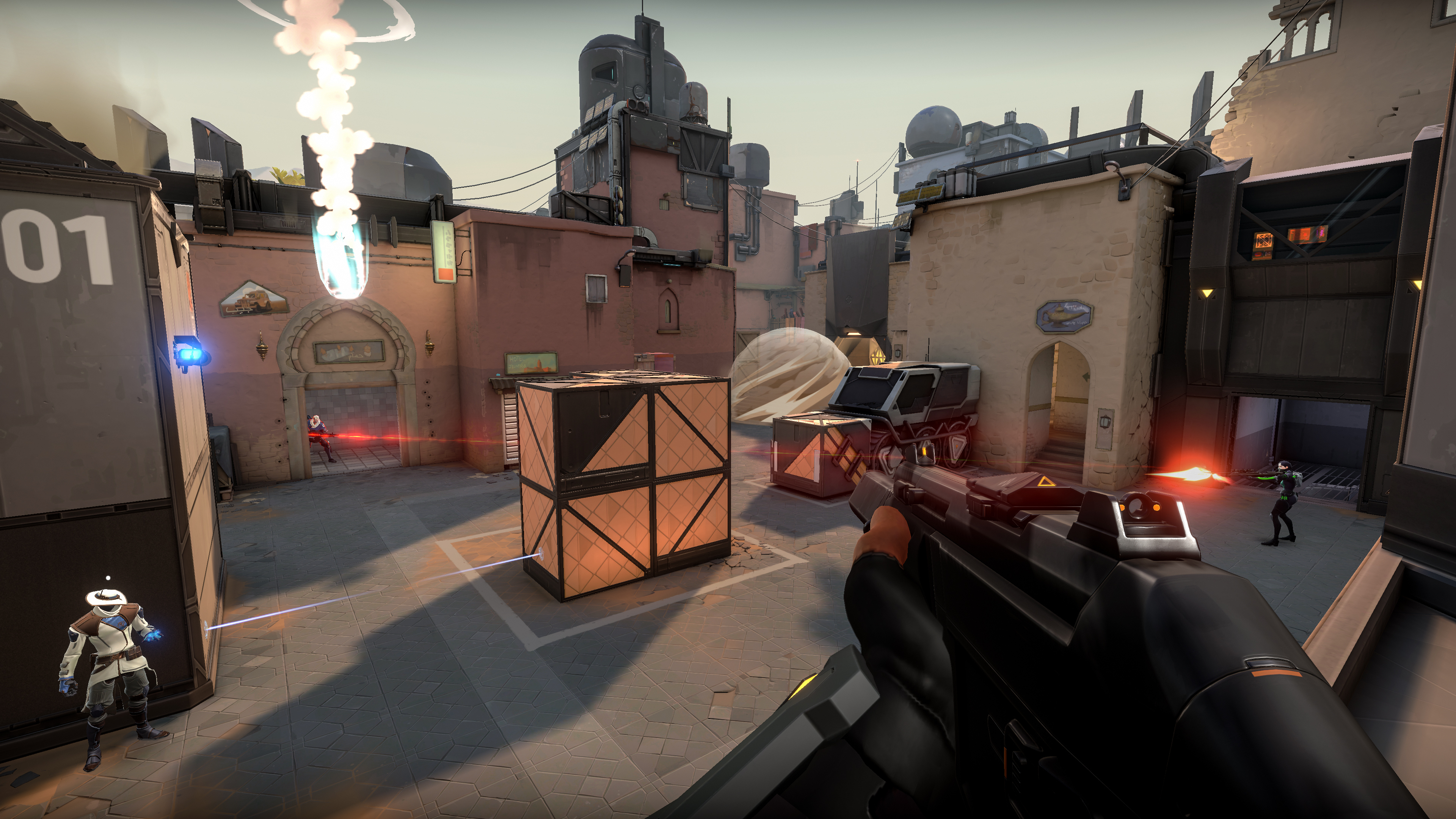
This environmental storytelling is woven into every corner of the map. Players will notice repurposed industrial machinery scattered throughout the medieval streets, creating a fascinating visual contrast between centuries-old French architecture and the heavy industrial equipment required for radianite extraction. The setting tells a story of survival and adaptation—of a community making the best of catastrophic change.
The official description captures this duality perfectly: players are tasked with sieging their way through medieval streets while exploiting the repurposed industrial machinery that now defines the landscape.
Map Design Philosophy
A Return to Traditional Structure
Perhaps the most noteworthy design choice with Corrode is what it doesn't have. Corrode is the second standard map in Valorant to release without any dynamic elements or mechanical hooks for gameplay. This means no moving walls, no rotating barriers, no teleporters, and no special interactive mechanics that alter the map mid-round.
This is a deliberate choice that speaks to Riot Games' approach to map diversity. While maps like Bind (with its teleporters) and Ascent (with its destructible doors) offer unique mechanical twists that create novel gameplay moments, Corrode proves that a well-designed, straightforward layout can stand on its own merits. The strategy comes from positioning, utility usage, and team coordination rather than from mastering map-specific gimmicks.
Three-Lane Fundamentals
The three-lane structure is a time-tested framework in tactical shooters, and Valorant's implementation with Corrode gives it their own flavor. The layout typically features:
- A Site and B Site as the two spike plant locations
- Three primary lanes connecting attacker territory to defender territory
- Mid control as a crucial contested area that enables rotations and flanks
- Connector pathways that link the lanes and create additional strategic options
For Southeast Asian Valorant players who have grown up mastering maps in the region's highly competitive ranked ladder, Corrode's layout should feel intuitive. The fundamental questions of any three-lane map apply here: Which lanes do you contest? Where do you stack defenders? How quickly can you rotate? Where do you use your information-gathering abilities?
What Makes Corrode Unique
The Salt Flat Aesthetic
Beyond its strategic layout, Corrode offers a visual and atmospheric identity unlike any other map in Valorant's pool. The salt mining theme permeates the environment—salt on the floors, salt on the walls, and salt in the air, as agent Waylay herself notes before a match. The evaporated seabed creates an eerie, expansive backdrop that contrasts sharply with the tight medieval streets players navigate during rounds.
This environmental identity isn't just cosmetic. The radianite salt mining operation shapes the physical space players move through. Industrial equipment, processing facilities, and mining infrastructure create the angles, cover points, and sightlines that define engagements. Understanding the map's visual language—being able to quickly identify positions based on the surrounding environment—gives experienced players an edge.
Audio Design and Atmosphere
Corrode features environmental audio elements that add to immersion and can even provide situational awareness. Announcements play through a loudspeaker system in Attacker Spawn, while a radio broadcasts in Defender Spawn. These ambient details help differentiate the two sides of the map and contribute to the feeling that players are operating within a functioning (if war-torn) facility.
Agent Considerations
While the source material doesn't provide specific meta analysis or recommended compositions for Corrode, the agents who have unique voice lines on this map offer some interesting context:
- Phoenix comments on the town's charm, noting in his typical confident fashion that he's picking up new language skills from his travels. His self-sufficient kit with healing and area denial could prove valuable in the close-quarters medieval streets.
- Waylay warns teammates to watch their gear, referencing the danger of mixing munitions with high concentrations of salt. Her line also hints at the environmental hazards of the setting.
- Veto seems less than impressed with the conditions, referencing the omnipresent salt and expressing a desire to finish the job quickly.
Of course, agent selection on any map depends on your team composition, the current meta, and personal comfort with specific kits. For a traditional three-lane map without dynamic elements, the fundamentals of having a balanced team with entry fraggers, controllers, sentinels, and initiators remain solid starting points. Always check current tier lists and community resources for the most up-to-date recommendations as the meta evolves with each patch.
General Tips for Playing Corrode
Since Corrode follows the traditional three-lane format, many of the core strategic principles that apply to Valorant's other standard maps are relevant here:
-
Mid control is king. On any three-lane map, controlling the central lane gives your team the flexibility to rotate between sites and pressure defenders from multiple angles. Invest utility and personnel in contesting mid.
-
Information is everything. Without dynamic elements to play around, reading the enemy team's tendencies and positioning becomes even more critical. Use recon abilities, listen for audio cues, and communicate constantly with your team.
-
Don't overcommit early. The three-lane structure rewards patience. Feint toward one site, gather information, and then execute on the weaker site rather than running headfirst into a stacked defense.
-
Learn the angles. Every map has its own set of common holding positions and pre-fire spots. Spend time in custom games exploring Corrode's geometry to understand where defenders like to play and where attackers like to push from.
-
Adapt your economy play. Without map-specific mechanics to exploit on save rounds, Corrode relies more heavily on raw aim and utility coordination. Play smart with your economy and prioritize full buys when possible.
-
Use the environment. The repurposed industrial machinery and medieval architecture create varied elevation levels and cover points. Understanding verticality and off-angles can give you the edge in duels.
Agent-Specific Quote Interactions
For lore enthusiasts, Corrode offers additional flavor through agent voice lines that reveal personality and attitudes. These don't directly impact gameplay, but they contribute to the experience of playing on the map and add narrative depth to each match:
- Phoenix demonstrates his cosmopolitan side, using a bit of French ("C'est sympa cette petite ville là") to appreciate the setting
- Waylay shows a practical, safety-conscious personality with her warning about munitions and salt
- Veto reveals a no-nonsense attitude, eager to complete the mission efficiently
These interactions help make each match feel like part of a larger story, reminding players that the agents they control are characters with distinct personalities reacting to the world around them.
Summary and Key Takeaways
Here's what you need to remember about Corrode:
- Corrode is Valorant's twelfth map, featuring a traditional two-site, three-lane layout
- It has no dynamic elements or mechanical hooks, making it one of the most straightforward maps in the pool—strategy relies purely on positioning, utility, and teamwork
- The setting is a reimagined Mont-Saint-Michel on Omega Earth, where climate change caused the surrounding waters to evaporate, turning the medieval town into a radianite salt mining facility
- The map's visual identity is defined by the contrast between ancient French architecture and repurposed industrial mining equipment
- Environmental audio cues include loudspeaker announcements in Attacker Spawn and a radio in Defender Spawn
- Core three-lane strategies apply: contest mid, gather information, read rotations, and avoid overcommitting
- Agent compositions should follow standard team-building principles, with roles for entry, support, and site control—check community resources for current meta recommendations
- The lore connects to Valorant's broader narrative around First Light and Omega Earth's environmental catastrophe
Corrode stands as a testament to the idea that a map doesn't need flashy mechanics to be compelling. Its strength lies in clean, readable design that rewards fundamental skills, smart utility usage, and strong team communication. Whether you're grinding ranked or exploring the lore, Corrode offers a solid competitive experience wrapped in one of Valorant's most atmospheric settings.